
Craft Kitchen-Ready Projects With Food-Safe Epoxy Resin
When a handmade board carries cheese to the table or a river top hosts family dinners, safety stops being an abstract idea. You want certainty that nothing harmful migrates from the surface into what you eat or drink. That reassurance is exactly what a properly cured, food safe finish delivers, and it explains why so many makers seek this epoxy out for kitchenware, serving pieces, and dining furniture. This page explains what the label actually means, how curing unlocks that protection, where the material excels, and how to pick a formula you can rely on. By the end, you will grasp the science well enough to pour with genuine peace of mind.
Trust matters most where meals happen. A beautiful finish means little if it raises doubts about what ends up in your body, so learning the details is worth a few minutes of reading. Let us walk through everything that separates a truly safe surface from a merely shiny one, because the distinction protects your family and your reputation alike.

Clear Resin
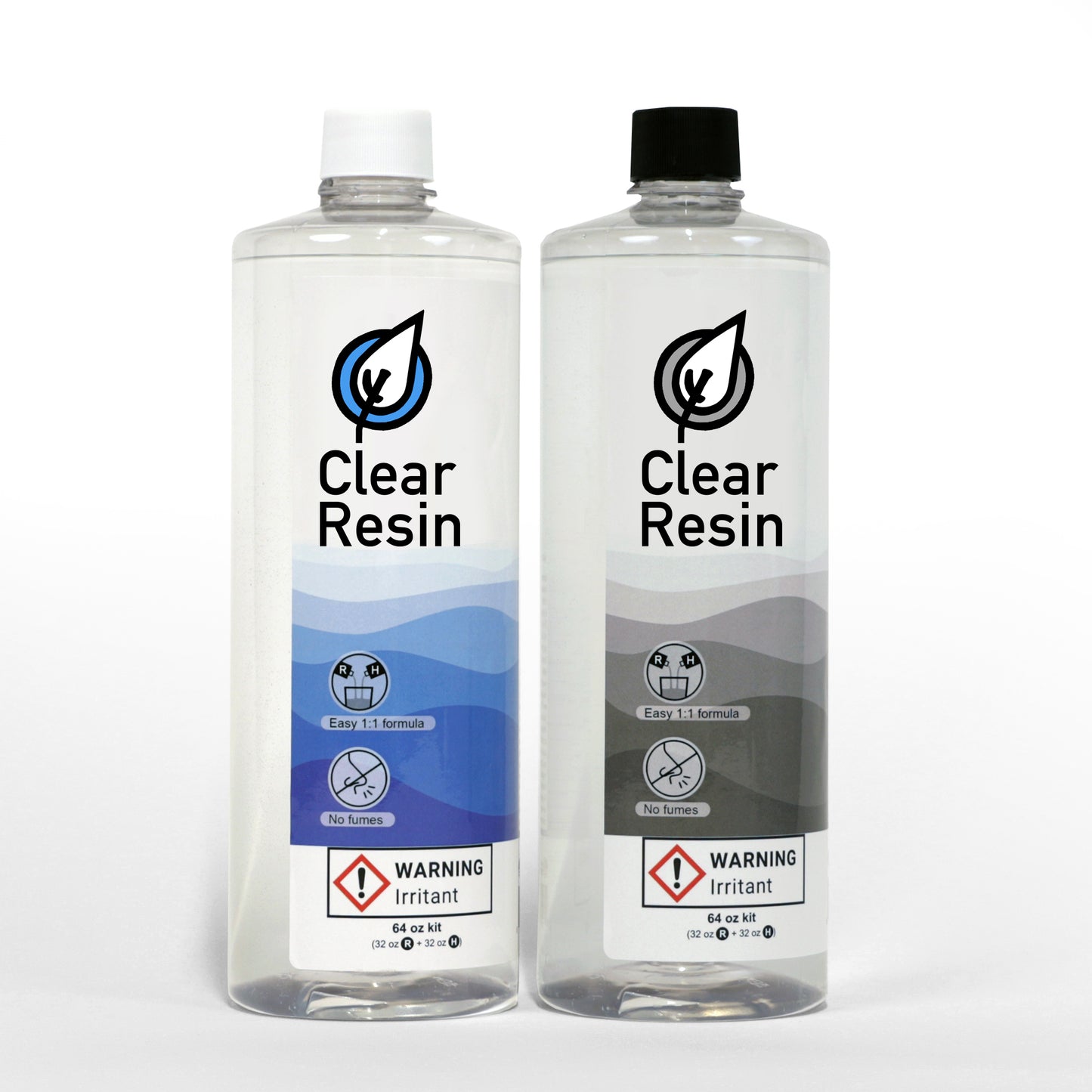
Clear Epoxy Resin Kit - 64 oz
Share
What Food Safe Really Means
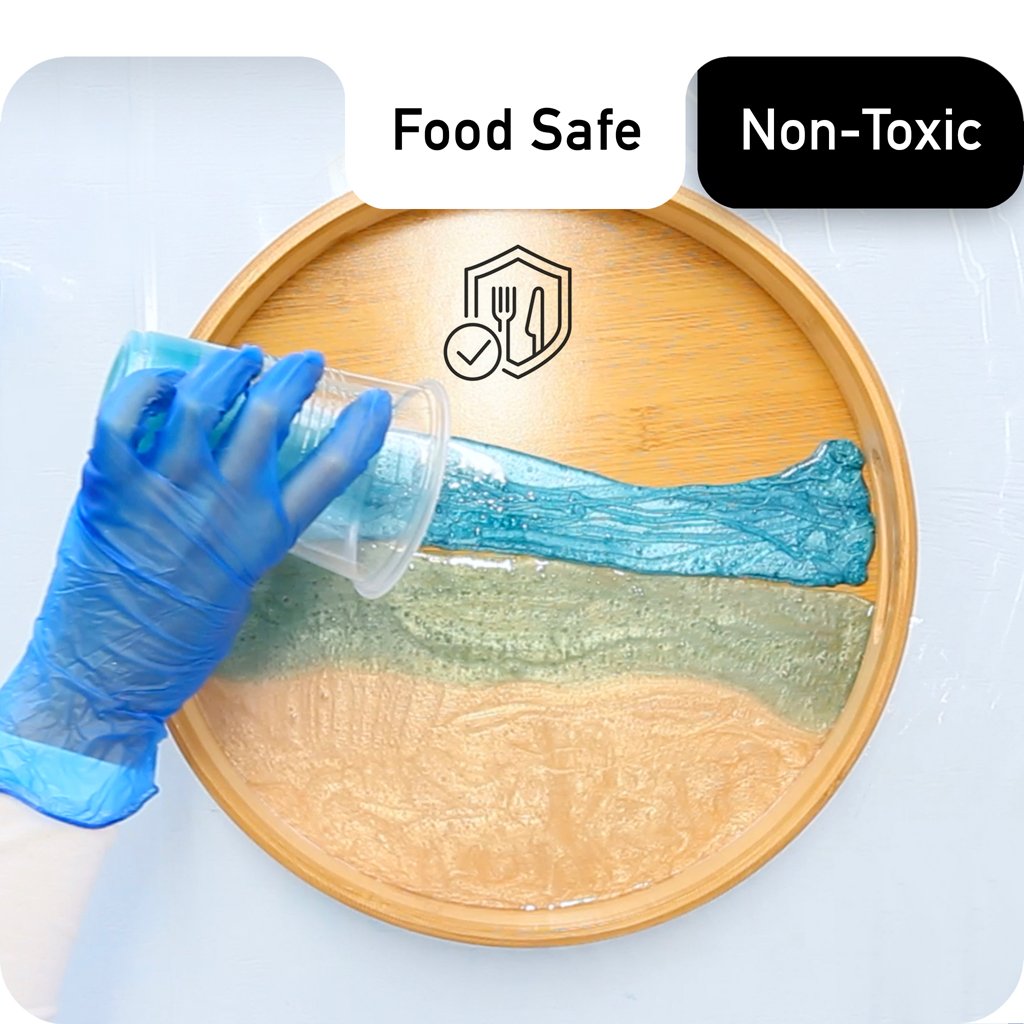
Labels can mislead when nobody defines them clearly. In practical terms, a food safe cured layer will not leach chemicals into edibles during normal contact, whether that surface is a cutting board, a coaster, or a serving tray. The key word is cured, because liquid components behave very differently from a finished, hardened film. Regulators across the United States look to the Food and Drug Administration for guidance, and an FDA-compliant food-safe result meets the agency's criteria for incidental contact once the reaction fully completes.
Terminology deserves a quick untangling. Food grade often describes a raw ingredient approved for direct contact, while food safety as a broader concept covers the whole picture of handling, hardening, and everyday use. A finished epoxy that satisfies these benchmarks earns trust for the kitchen, though only after you follow the maker's directions precisely. Grasping that difference safeguards both your creations and the people who gather around them.
Marketing language can blur these lines even further. Some sellers imply a wet product is dinner ready, which is never accurate before a complete set. Honesty about the gap between liquid and solid states is a hallmark of a brand worth your confidence. Ask pointed questions, read the technical notes, and favor makers who explain rather than exaggerate their claims.
Context also shapes what counts as acceptable. Occasional contact, like a slice of bread resting briefly on a coated board, differs from prolonged storage of acidic liquids. A responsible manufacturer spells out which uses a cured surface suits, so you can match the epoxy to the job. Reading that guidance carefully prevents disappointment and keeps everyone who dines safe and healthy.
Selling handmade goods raises the stakes even higher. Customers paying for a serving board or platter expect honesty about what touches their meals, and one vague answer can cost a sale. Stocking a clearly documented epoxy lets you field buyer questions with authority. Confidence in your materials becomes trust in your brand, and word travels quickly among discerning shoppers.
Understanding BPA And What Makes Epoxy Safe
BPA is the acronym on nearly everyone's mind when kitchen products come up. Short for bisphenol A, this compound has appeared in countless plastics and older resin systems, sparking concern about hormonal effects should it migrate into meals or drinks. Shoppers hunting for a safe finish almost always want to know where a formula stands on the matter, and rightly so.
Chemistry offers real reassurance here. Once an epoxy fully hardens, its molecules lock into a stable, cross linked network, which is precisely what renders the epoxy inert against contact with edibles. Any bisphenol present during the liquid stage becomes bound within that rigid lattice, dramatically limiting movement. A thoroughly hardened film behaves nothing like the wet mixture, and that transformation is the entire point of waiting for a full set.
Testing turns theory into proof. Responsible manufacturers send finished samples to laboratories that measure whether any BPA transfers under realistic conditions, then weigh results against strict thresholds. Passing those checks lets a company describe its cured product with confidence rather than guesswork. When you compare options, documentation around bisphenol migration separates careful producers from those making vague promises about BPA.
Perspective helps here as well. Trace amounts of the compound exist across modern life, from receipts to food can linings, so context matters when judging risk. A fully cured, well made epoxy locks its chemistry down tightly, keeping any potential BPA transfer far below levels of concern. Understanding that reality replaces fear with informed, practical confidence about the pieces you create.
Independent standards give shoppers a shorthand for judging quality. Certifications and published lab summaries let a careful buyer verify claims without a chemistry degree. Because BPA worries drive so many purchases, transparent brands increasingly share this proof up front. Seeking that openness rewards you with a product whose protection rests on evidence rather than clever wording.
Where Food Safe Resin Shines
Versatility makes this material a kitchen favorite. A live edge dining table sealed with a glossy layer becomes both functional and stunning, ready for daily meals without worry. Many woodworkers finish a table top with a clear coating that highlights grain while shrugging off spills, moderate heat, and constant wiping. Beauty and practicality rarely align so neatly in one product.
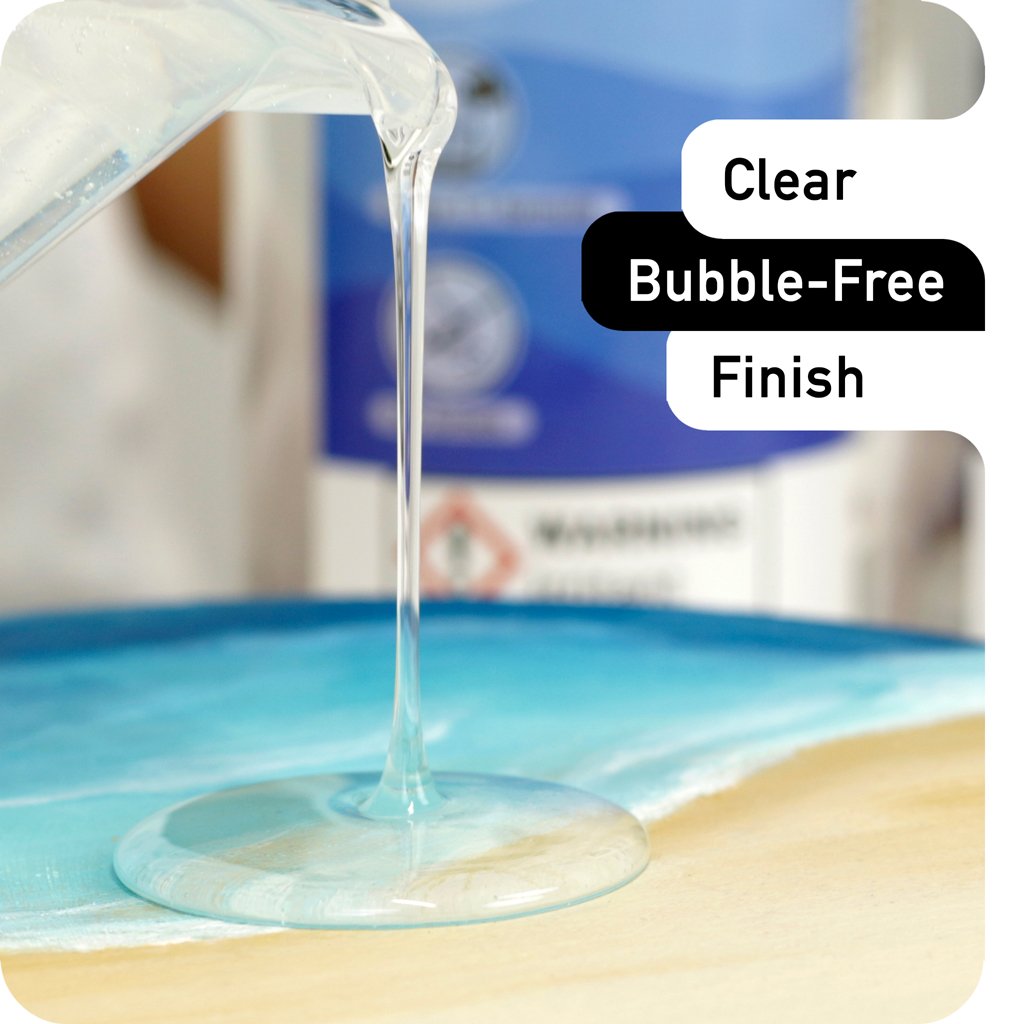
Thicker projects call for a different technique. A deep pour epoxy fills voids, encases keepsakes, and builds substantial castings in fewer passes, which suits chunky river tables or a bar surface. When you work in deeper layers, you unlock dramatic clarity and depth, though patience during the longer cure becomes essential. Rushing a heavy pour traps warmth and bubbles, so measured layering wins every time.
Smaller items belong on this list too. Coasters, trays, spoon rests, and cheese boards all gain a wipeable, attractive skin that stands up to lemons, oils, and frequent washing. A single tabletop project might anchor a dining room, while a batch of coasters makes thoughtful, practical gifts. Range like this keeps the epoxy endlessly useful around any home.
Seasonal projects add even more appeal. Holiday serving trays, personalized coasters for weddings, and engraved keepsake boxes all benefit from a wipeable, protective shell. Because the finished epoxy resists moisture and stains, these gifts survive years of celebrations. Thoughtful, handmade pieces like these often outshine anything found on a crowded store shelf.
Restaurants and small businesses take notice as well. A gleaming counter or a sealed serving station reads as polished and hygienic to paying guests. Because a hardened surface wipes clean and resists moisture, it holds up under commercial pace far better than untreated wood. Durability plus visual appeal turns a practical choice into a genuine selling point for hospitality spaces.
How To Cure It Correctly For Food Contact
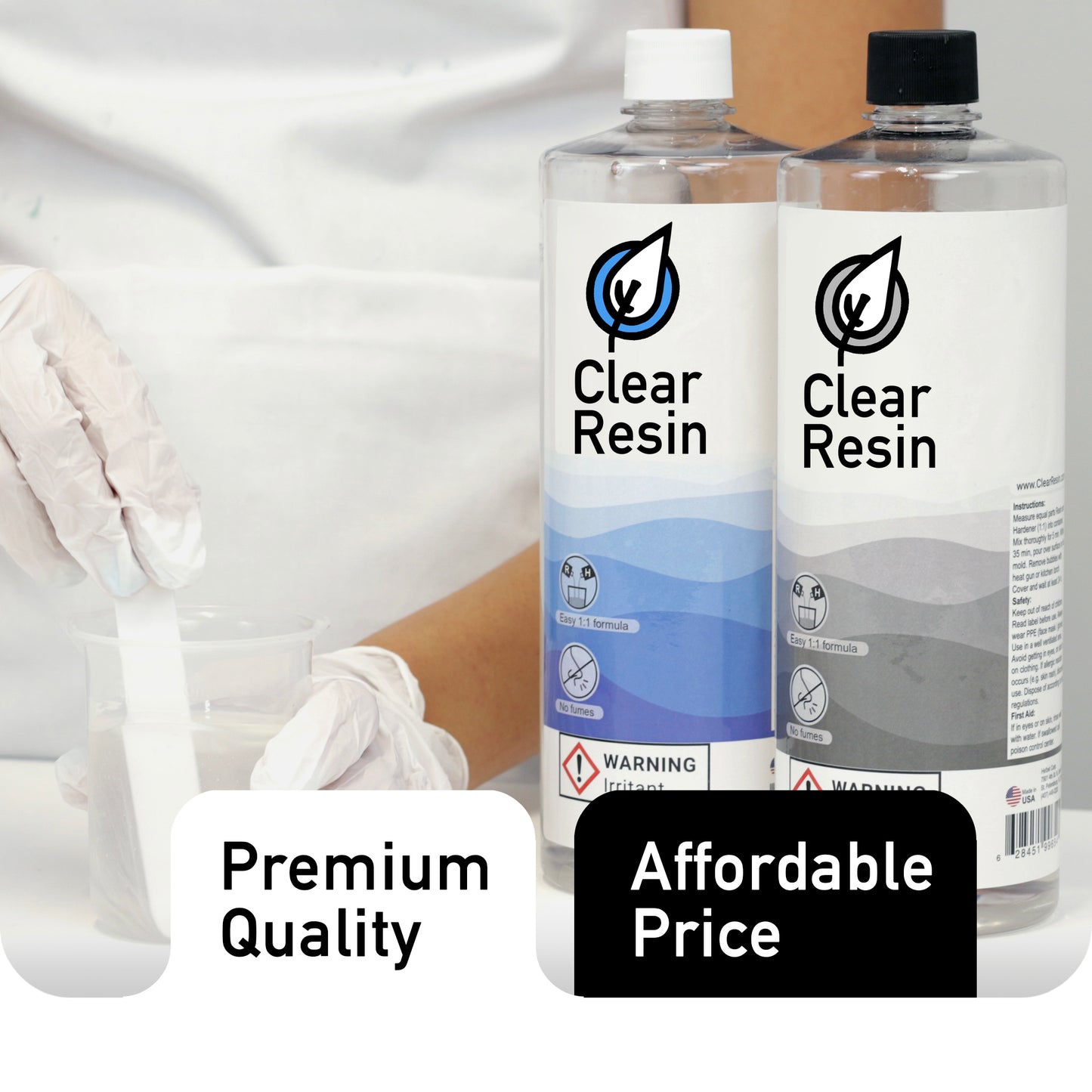
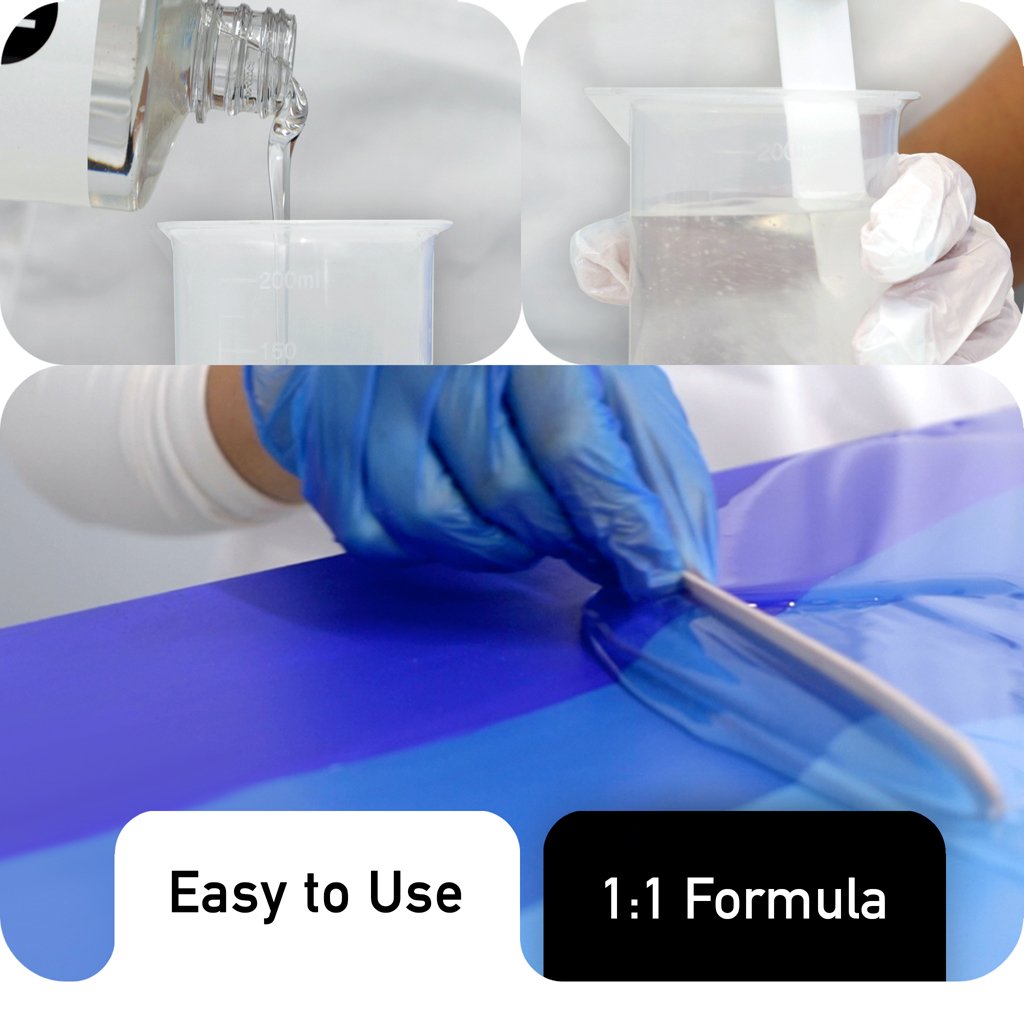
Proper curing is the difference between a safe surface and a risky one. Start by measuring an exact one to one ratio, then blend slowly for several minutes so no cloudy streaks remain. Skimping at this stage leaves tacky zones where soft epoxy, moisture, and residue can mingle badly, so precision genuinely matters more than raw speed.
Time and warmth finish the job together. Most formulas turn dry to the touch within a day, then keep strengthening until they reach full hardness near the seventy two hour mark. Keep the room comfortably warm and stable, since cold air stalls the chemical reaction. Only after this complete change does the surface qualify for touching anything edible with confidence.
Small habits protect the outcome. Work on a level bench, shield the area against dust, and resist poking a piece before it firms up entirely. Hurrying the timeline is the most common error beginners make, and it quietly undermines every safety benefit they were counting on. Give the chemistry its full window, and the reward is a rock hard, glassy, worry free result.
Cleaning and upkeep extend that safety over time. Wash cured pieces by hand with mild soap rather than harsh scouring, and avoid prolonged soaking that no finish enjoys. Keeping hot pans on trivets protects the surface from softening, since extreme heat challenges any epoxy. Simple care like this preserves both the good looks and the protective integrity for many years.
Documenting your own process pays off later. Noting the mix ratio, room warmth, and timing for each batch builds a record you can repeat exactly. Should a piece ever cure oddly, those notes reveal what changed. Treating every pour as a small experiment steadily sharpens your results and deepens command of the epoxy itself.
Ventilation and gloves round out safe practice. Even a mild epoxy deserves a window cracked open and hands shielded during mixing. These small precautions cost nothing yet keep the making process as healthy as the finished surface. Good habits at the bench mirror the care you want in the final piece.
Beyond The Kitchen: Bonding, Coating And Strength
Usefulness stretches well past dining surfaces. A quality epoxy doubles as a powerful adhesive, gripping wood, stone, and metal with a tenacious hold. Crafters lean on that gripping strength for repairs, laminations, and mixed media art. Unlike many single purpose adhesives, a versatile epoxy manages both gluing and finishing within one product.
Durability rounds out the appeal nicely. As a resilient epoxy resin, it resists scratches, water, and daily knocks, keeping surfaces looking fresh across many years. Compared with brittle alternatives, tougher epoxies flex slightly under stress instead of cracking outright. Whether you seal a countertop or mend a wobbly chair leg, the same bottle earns its keep repeatedly.
Creative uses keep multiplying. Artists embed photos, coat canvases, and build layered jewelry, all with the same dependable chemistry. Home fixers value having one trustworthy container for a dozen odd jobs. That flexibility is a major reason enthusiasts keep a supply within reach long after their first project wraps up.
Outdoor and workshop tasks broaden the picture further. Sealing a raw wood slab, stabilizing a spalted burl, or sealing a garage workbench all fall within reach of a single strong formula. Because the same chemistry bonds and protects, you consolidate several products into one reliable purchase. Fewer bottles cluttering the shelf means simpler projects and steadier results.
Learning the material once unlocks a lifetime of projects. Skills you build sealing a countertop transfer directly to art panels, jewelry, and furniture repair. Momentum compounds as each success suggests the next idea. Investing effort into one dependable epoxy pays dividends across every corner of a creative, hands on life.
Choose A Formula You Can Trust
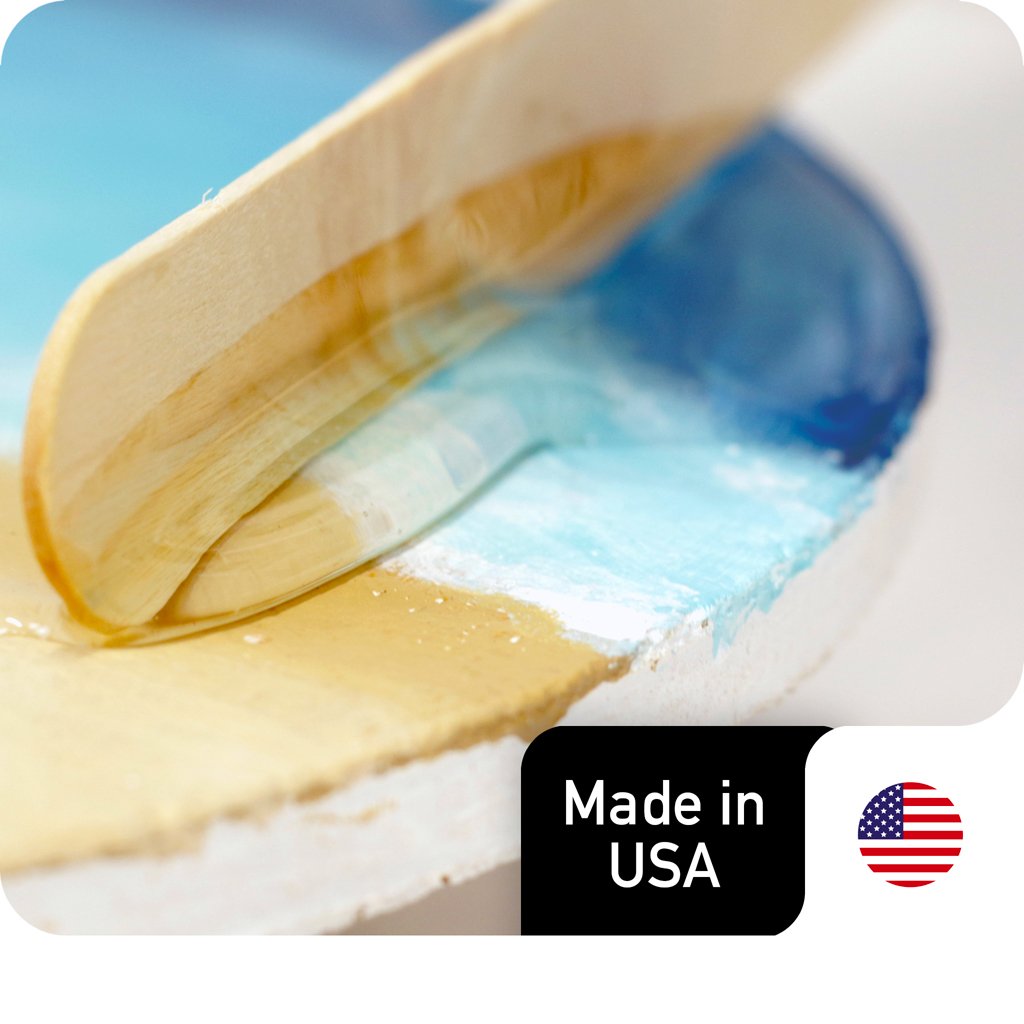
Not all resins are created equal, so selection deserves genuine thought. Look for clear documentation of laboratory testing, an honest account of cured performance, and domestic manufacturing you can actually verify. A trustworthy kit arrives with perfectly matched parts, plain directions, and predictable outcomes batch after batch.
Confidence should steer your final decision. Dependable epoxy resins behave identically every pour, cure to a hard, mirror bright finish, and stand firmly behind their safety claims. Pick the size fitting your plans, from a modest trial to an ambitious build, and begin creating pieces destined for the heart of the home. Reading real reviews adds a final layer of assurance, since fellow makers describe how an epoxy resin flows, cures, and performs under daily meals in ways a product page cannot. Value shows up over time, since one versatile bottle replaces several narrow specialty products.
There has never been a finer moment to start. Gather your supplies, prepare a clean space, and mix your first batch with total assurance. Your safest, most beautiful work sits only a careful pour away, so commit today to a material engineered to earn lasting trust at every shared meal. Picture the finished board on your counter, the compliments from guests, and the quiet pride of knowing exactly what went into it. That satisfying moment begins the instant you decide to pour that very first careful batch.
Frequently Asked Questions
What makes an epoxy resin food safe?
An epoxy becomes food safe once it fully cures into a hard, stable, cross-linked surface that will not leach into edibles during normal contact. The liquid components are not safe on their own; only a complete cure creates the inert film. Following the exact mix ratio and full cure time is essential to reach that state.
Is cured epoxy resin FDA-compliant for food contact?
Many quality epoxies meet FDA criteria for incidental food contact once fully cured, meaning brief exposure like a board holding bread or cheese. It is not intended for cooking surfaces or long-term storage of hot or acidic foods. Always confirm the maker's specific guidance and allow the complete cure before any food touches it.
Does food-safe epoxy contain BPA?
Some epoxy chemistry derives from bisphenol compounds, but a full cure locks those molecules into a rigid network, sharply limiting any migration. Responsible brands test finished samples against strict thresholds to confirm safety. If BPA is a concern, look for documented lab testing and clear statements about cured performance rather than vague marketing.
Can I use epoxy resin on cutting boards?
Epoxy suits the edges and decorative surfaces of a board, but not the areas where you actively cut. Knife marks break the sealed film and create grooves that trap food. For true cutting zones, leave bare, oiled wood. Use the cured epoxy for handles, borders, and serving trays that face only light contact.
How long until epoxy is safe for food contact?
Most epoxy feels dry within twenty four hours but needs the full cure, usually around seventy two hours, before it is safe for food contact. Keep the room warm and stable during this window. Cold temperatures slow the reaction and can leave soft spots, so patience is critical for a properly hardened surface.
Is epoxy resin safe once fully cured?
Yes. A correctly measured and fully cured epoxy becomes an inert solid that is stable and safe for incidental food contact. Risk mainly comes from uncured or poorly mixed resin, where soft or tacky areas remain. Accurate measuring, thorough blending, and the complete cure time are what guarantee a genuinely safe result.
Can food-safe epoxy be used on tables and countertops?
Absolutely. It is a popular choice for dining tables, bar tops, and counters, offering a glossy, wipeable, water-resistant surface. Deep pour formulas handle thicker river tables, while thin coats seal flat tops. Keep hot cookware on trivets, since prolonged high heat can soften any epoxy over time and mar the finish.
What is the difference between food grade and food safe epoxy?
Food grade usually refers to a raw material approved for direct contact, while food safe describes a finished, cured surface suitable for incidental contact. The terms overlap but are not identical. What matters most for makers is whether the fully cured product meets recognized standards for touching food, not just the liquid ingredients.
Do I need a special epoxy for deep pours?
Yes. Deep pour epoxy is formulated to cure slowly in thick layers without overheating, which is ideal for river tables and castings. Standard coating epoxy cures faster and can crack or yellow if poured too deep. Match the product to your thickness, and confirm the deep pour version also meets food safe standards.
How do I care for a food safe epoxy surface?
Wash by hand with mild soap and a soft cloth, avoiding abrasive scrubbers that scratch the finish. Skip long soaks and harsh chemicals, and always use trivets under hot pans since heat can soften epoxy. Gentle, consistent care preserves both the clarity and the protective, food safe integrity for many years.