
Shop Low Odor Epoxy Resin for a Cleaner, Fresher Pour
Working with epoxy has long carried a trade-off. You wanted glossy, durable results, yet the sharp chemical smell often pushed you outdoors or had you reaching for a respirator. Clear Resin removes that barrier. Pour at the kitchen table, in a spare bedroom, or inside a compact workshop without wincing at the first breath. This formula was built for makers who value both stunning finishes and clean air, proving comfort and quality can live inside a single bottle.
The difference becomes obvious the moment you open the container. Instead of a stinging wave that clears the room, you get a mild, manageable scent that stays out of your way. That shift matters for anyone crafting in a shared home, a small apartment, or a studio where opening a dozen windows simply is not an option.

Clear Resin
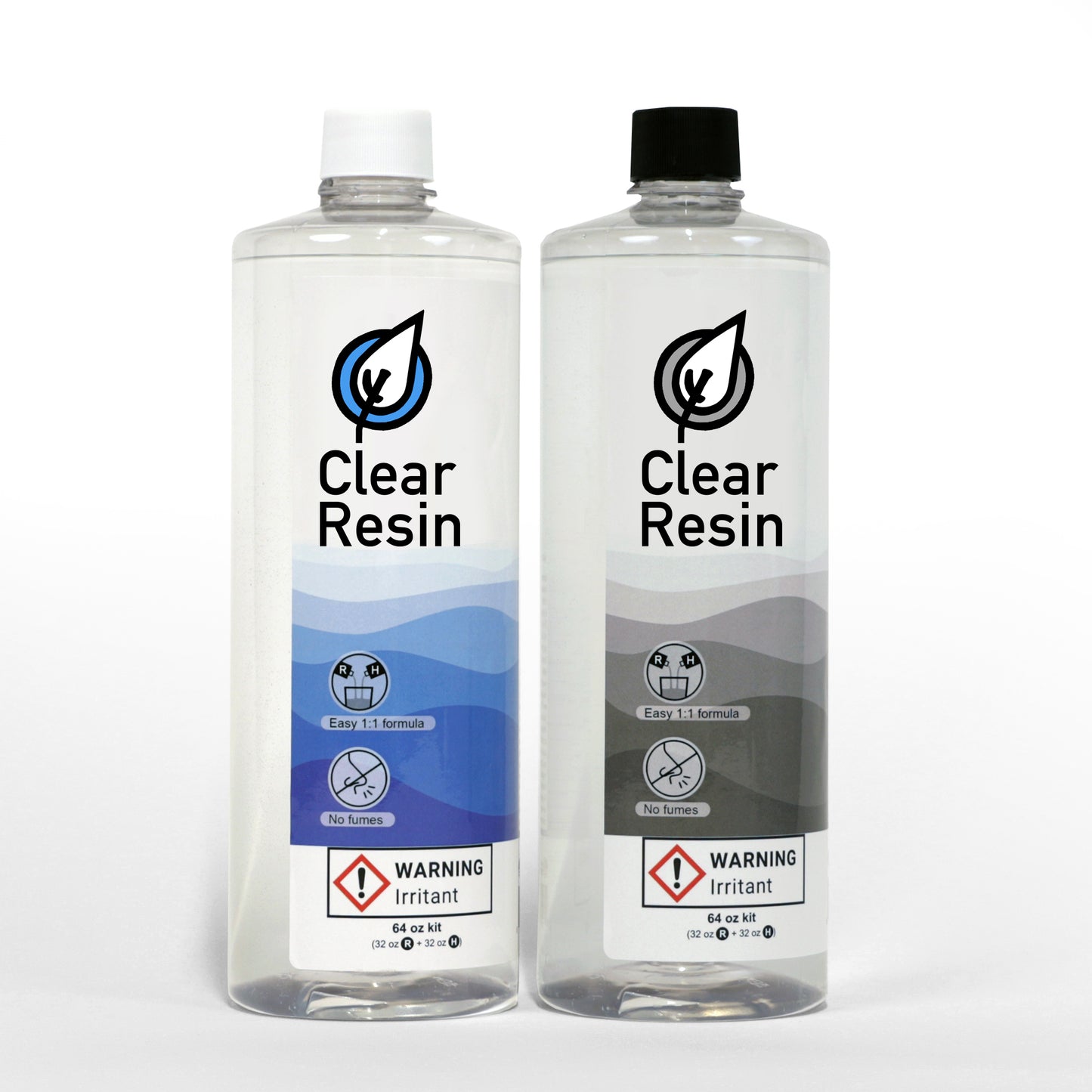
Clear Epoxy Resin Kit - 64 oz
Share
The Science Behind a Fume-Free Formula
Understanding what happens inside the bottle helps explain why some coatings clear a room while others stay gentle. A little chemistry goes a long way toward smarter buying decisions.
How Epoxy Chemistry Actually Works
Every two-part system relies on a reaction between two liquids, a resin and a hardener. When you combine them, their molecules link into a rigid, cross-connected network that turns pourable liquid into solid, glassy material. That bonding process gives the finished surface its strength and clarity. The specific ingredients each maker chooses for those two parts determine how the blend behaves, how it smells, and how safely it can be handled indoors.
Why Odor Develops in the First Place
That familiar sharp scent does not come from the hardening reaction itself. It usually traces back to reactive diluents and solvents that manufacturers add to thin the mixture or speed things along. As those lightweight ingredients evaporate into the air, your nose registers the punch. Formulas built without them stay noticeably calmer, which is precisely why a gentler blend feels so different the second you crack open the container.
Why Chemical Levels Differ From One Brand to Another
Not every coating on the market is built the same way, and the gap between them is real. Some rely heavily on cheap thinning agents that off-gas aggressively, while others invest in cleaner chemistry that skips those shortcuts. Because ingredient choices vary so widely, two bottles that look identical can behave completely differently in a closed room. Reading how a product is formulated, rather than trusting the label at a glance, remains the surest way to know what you are actually breathing.
What Sets This Resin Apart From Older Epoxies
Older two-part systems earned a rough reputation for a reason. Many released strong fumes, relied on aggressive solvents, and demanded serious ventilation. Clear Resin was reformulated to leave those drawbacks behind while keeping the glass-like clarity crafters love.
A Non-Toxic Choice You Can Trust
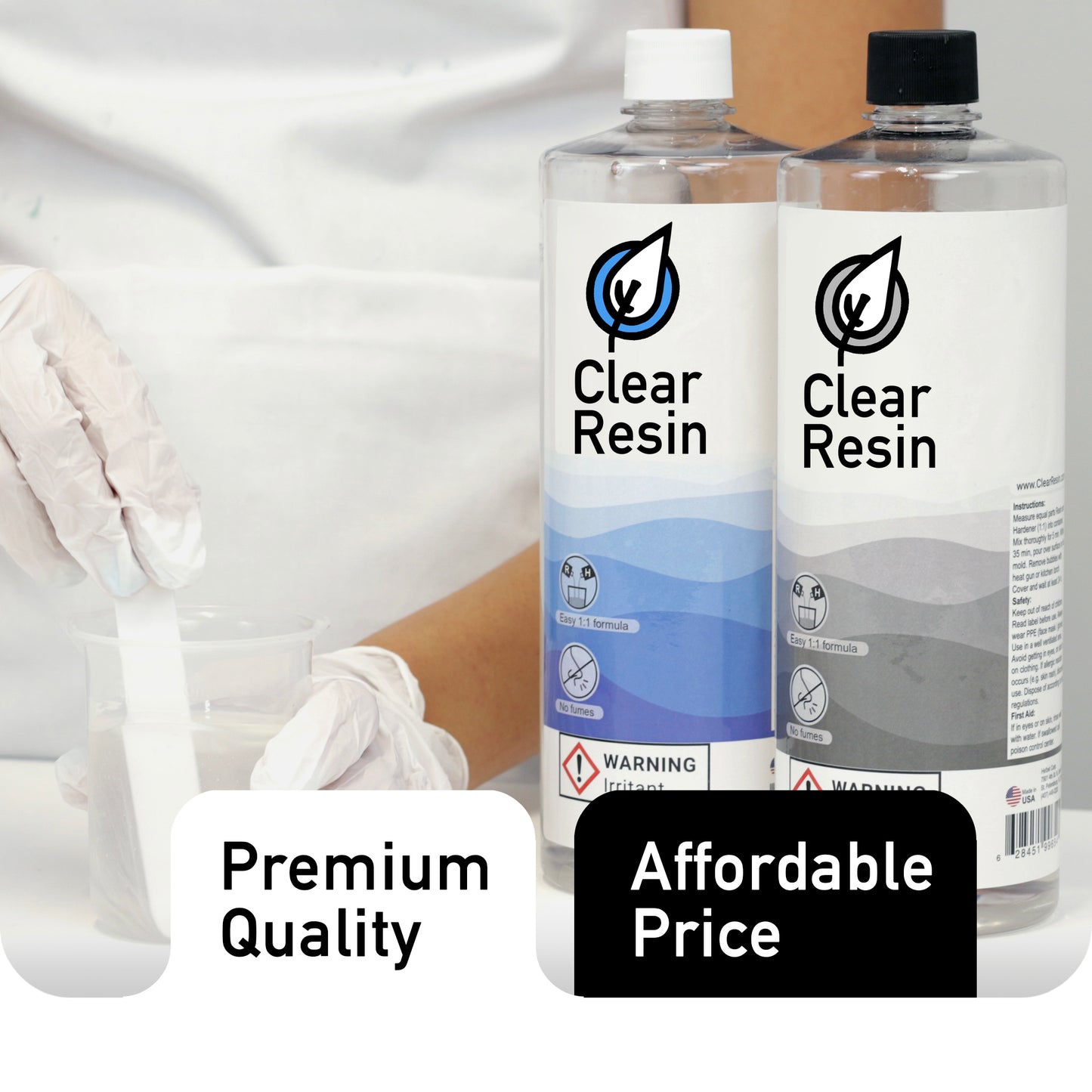
Our clear epoxy resin is typically non-toxic and made without harsh solvents or BPA. That means fewer worries about what lingers in your air after a long session at the table. You still want fresh airflow and a good pair of gloves, though the safety profile here gives beginners and seasoned artists real peace of mind. Families crafting alongside kids especially appreciate a gentler option that behaves predictably from first pour to final finish.
Skip the Overpowering Smell
The harsh smell epoxy hobbyists dread simply does not dominate the room with this product. Because the formula avoids the ingredients responsible for that punch, you can layer, tint, and pour for hours without a pounding headache. Low smell does not mean weak performance; it means you finally get to enjoy the making process rather than endure it.
Understanding VOCs and Why They Matter
Air quality has become a top concern for indoor creators, and for good reason. Volatile organic compounds are the invisible culprits behind that eye-watering sting many associate with traditional coatings.
What Does Low VOC Really Mean?
A product that has low VOC (volatile organic compound) content releases far fewer of those airborne chemicals as it sets. Clear Resin goes further, giving off no fumes or VOCs at all once you follow the label directions. Choosing cleaner materials protects your lungs during long stretches at the bench and keeps the space around you noticeably fresher. When a maker searches for voc free supplies, this kind of clean-pouring option is exactly what they hope to find.
A Cleaner Option for Indoor Spaces
Reduced VOC epoxy pours give apartment dwellers and hobbyists a practical path to safer sessions indoors. You no longer need a detached garage or an industrial fan running full blast. A gentler chemical footprint also supports a more environmental approach to your craft, which growing numbers of buyers care deeply about. Some shoppers hunting for eco-friendly epoxy land here precisely because the blend respects both the maker and the room they work in.
Crystal-Clear Results Without the Sting
Clarity is where Clear Resin truly shows off. Each pour settles into a smooth, transparent layer that displays pigments, inclusions, and wood grain with mirror-like brilliance. The absence of fumes never comes at the expense of that showroom shine.
Whether you are coating a live-edge tabletop or sealing a delicate keepsake, the finish stays bright and true. No yellowing, no cloudiness, and no dull haze creeping in over the seasons. You invested real effort into your piece, so the surface deserves to look flawless for years rather than months.
Built for Small Studios and Shared Spaces
Not everyone has a dedicated shop with commercial airflow. Plenty of talented creators work in bedrooms, dorms, dining nooks, and cozy corners of the house. This resin was designed with those exact realities in mind.
Limited ventilation used to rule out epoxy entirely for some hobbyists. That restriction fades once the harsh scent disappears. Renters especially benefit, since they can produce beautiful work without upsetting neighbors or filling a hallway with chemical odor. The freedom to make wherever you happen to be is a genuine game changer for the everyday artist.
What You Can Create With It
Versatility keeps this product on the shelves of both weekend crafters and full-time sellers. The clarity and self-leveling behavior open the door to an enormous range of ideas.
Art, Coasters, and Home Décor
Fluid art geodes, ocean pours, glossy serving boards, and protective topcoats over paintings all shine with this formula. Coasters gain a thick, water-resistant surface that shrugs off condensation and hot mugs. Decorative trays and cheese boards turn everyday hosting into something memorable, and each piece hardens enough for daily handling.
Jewelry and Small Keepsakes
Pendants, earrings, bookmarks, and tiny embedded treasures come to life under a flawless transparent layer. Dried flowers, foil, and glitter stay locked in place with sharp detail. Because the scent stays mild, you can fuss over intricate little pieces for as long as inspiration lasts without needing a break for fresh air.
Who This Resin Is Best For
This formula fits a specific and growing group of makers exceptionally well. Apartment residents and renters top that list, since they can finally create indoors without upsetting neighbors or battling limited airflow. Beginners gain a forgiving, low-stress entry point, while seasoned artists appreciate the clarity for fluid pours and gallery pieces.
Woodworkers building river tables and live-edge tops rely on the self-leveling flow and yellowing resistance for large surfaces. Jewelry makers value the fine detail it captures in pendants, earrings, and small keepsakes. Parents crafting alongside children under supervision benefit from a typically non-toxic profile that eases everyday worries. Small businesses and craft-fair sellers round out the group, drawn to food-safe results and consistent, repeatable quality across every batch.
Where This Resin Is Not the Right Fit
Honesty about limits matters, so a few jobs fall outside what this product is designed to handle. Industrial flooring and heavy commercial coating systems demand specialized formulas engineered for foot traffic and machinery, which sits beyond this scope. High-temperature casting is another mismatch, since the hardened surface resists heat only up to 120°F and can soften above that threshold.
Very deep single pours also stretch past the recommended limits, because each layer should stay no thicker than a quarter inch to avoid trapped air and overheating. Thicker castings simply need to be built in stages instead. Outdoor structural repairs and load-bearing exterior fixes likewise call for purpose-built engineering products rather than a craft-focused coating. Matching the right material to the right task always produces safer, better-looking outcomes.
Choosing the Right Kit Size for You
Picking a volume comes down to what you plan to make and how often you sit down to make it. Two convenient options cover most makers, from curious first-timers to busy sellers.
Starter Sizes for First Timers
The 32 oz option is ideal for testing techniques, gifting, or figuring out whether resin art suits your style. Smaller pours mean less pressure, and this kit lets you experiment freely before committing to bigger work. Beginners tend to love how forgiving the whole process feels once the fear of fumes disappears.
Larger Volumes for Frequent Makers
The 64 oz choice suits anyone tackling tabletops, river designs, or a steady stream of orders. Buying a bigger kit stretches your budget further per ounce and keeps you stocked through back-to-back sessions. Sellers preparing for craft fairs frequently reach for the larger size to avoid running dry mid-batch. If your ambitions eventually scale toward a gallon of coverage, layering multiple pours handles even the widest surfaces with ease.
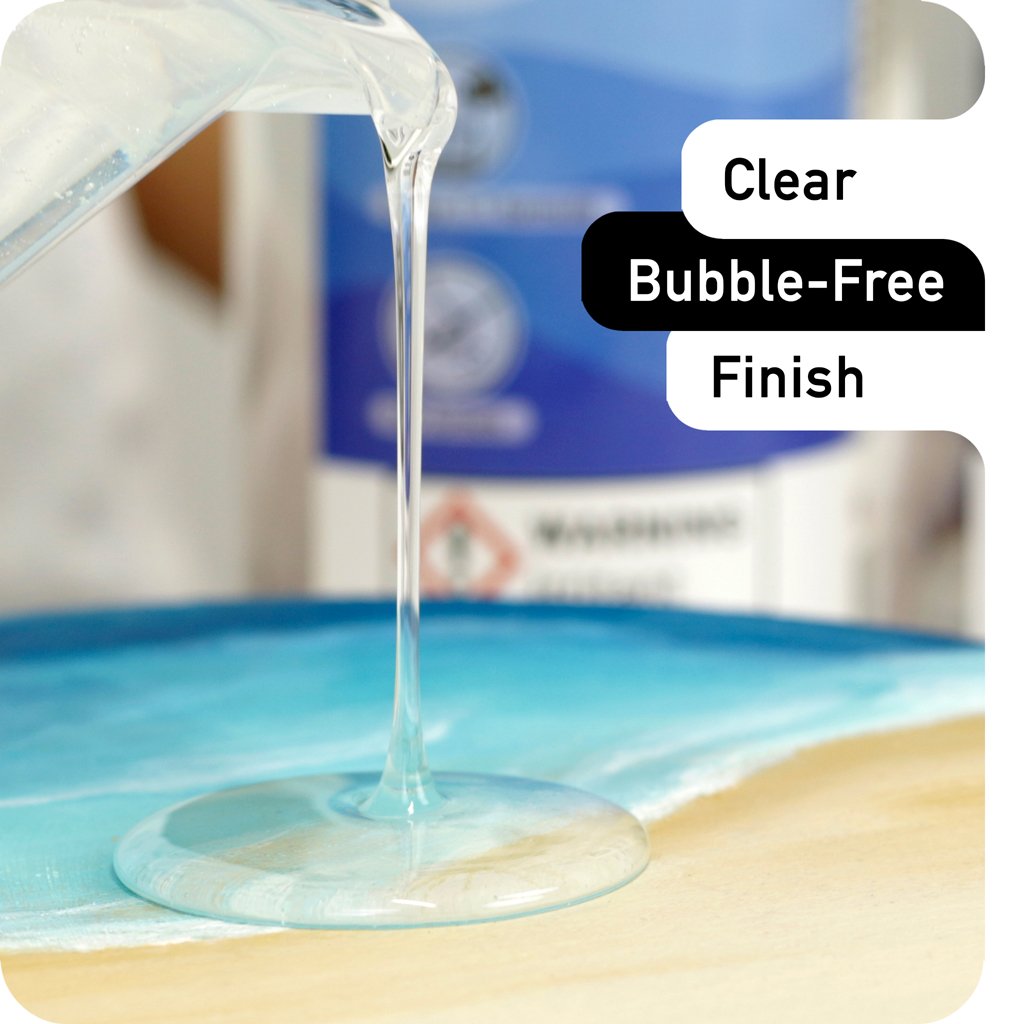
Getting a Bubble-Free, Glass-Smooth Finish
Nothing frustrates a maker like trapped air marring an otherwise perfect surface. Thankfully, a few simple habits keep bubbles to a minimum from the very first stir.
Warm your resin and hardener to between 75 and 85°F before mixing, since cold liquid traps more air. Stir slowly and deliberately rather than whipping the blend. Once poured, a quick pass with a flame torch releases surface bubbles instantly. When forming pieces inside a soft mold, swap that torch for a heat gun to protect the material. These small steps reward you with the coveted, professional-grade smoothness everyone chases.
How the Resin Sets and Hardens Over Time
Patience pays off with any two-part epoxy, and knowing the timeline keeps expectations realistic. Around 24 hours after pouring, the surface turns dry to the touch and ready for gentle handling. Full hardness arrives near the 72-hour mark, when the piece reaches its toughest, most durable state.
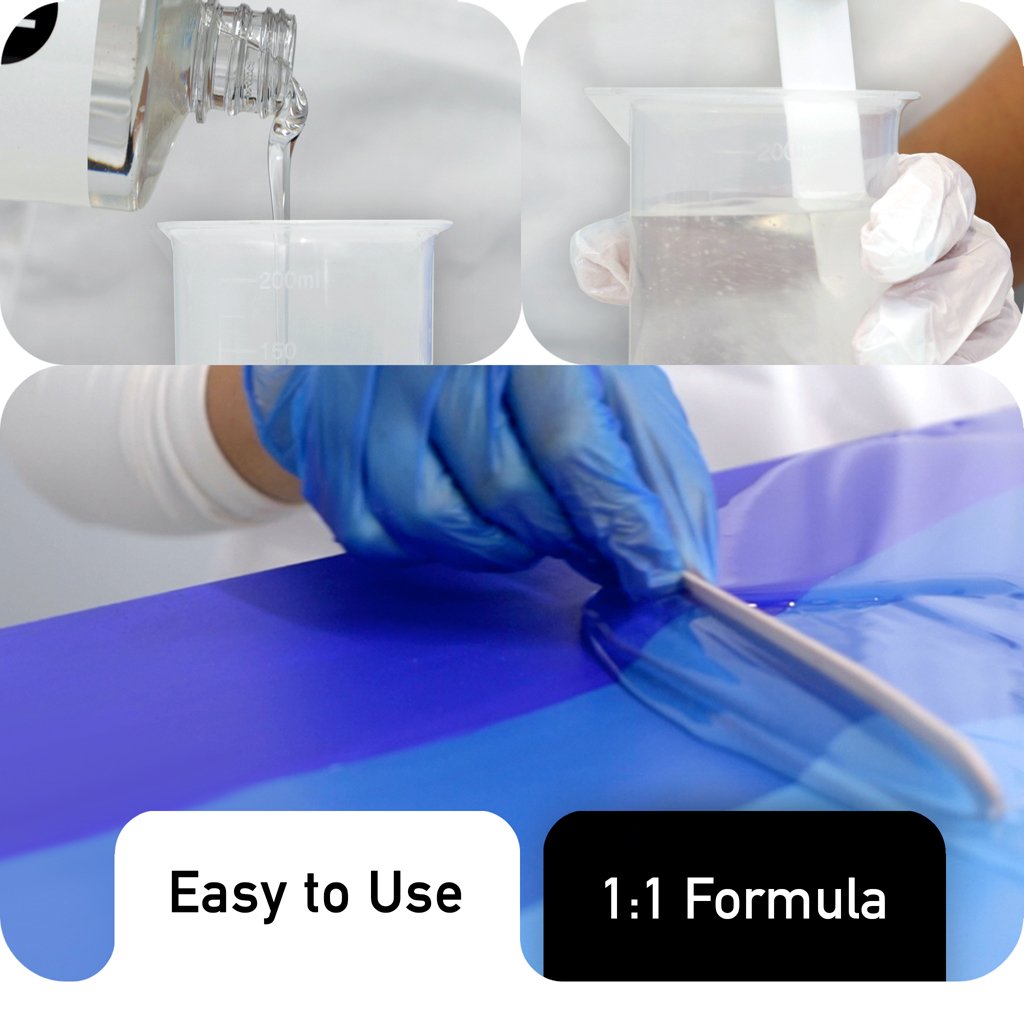
You get roughly 35 minutes of working time once the two parts meet, so prep your surface and gather everything beforehand. Warming the bottles in a water bath speeds the chemistry slightly, trimming about ten minutes from that window. Plan ahead, move with purpose, and the whole sequence feels calm rather than rushed.
Pairing Your Resin With the Right Helpers
The pour itself is only part of the equation. Having a few thoughtful items on hand makes every session smoother and cleaner.
Silicone Forms and Reusable Helpers
Because hardened resin refuses to stick to silicone, molds made from that material release finished pieces cleanly again and again. Plastic spreaders, mixing cups, and stir sticks round out a maker's supply drawer, and many wash up for repeated use. A few well-chosen accessories, paired with reliable tools, turn a chaotic bench into an organized creative station. Beginners often start with basic gear, then expand their collection of tools as their skills grow and their ideas get bolder.
Food-Safe Confidence Once Fully Hardened
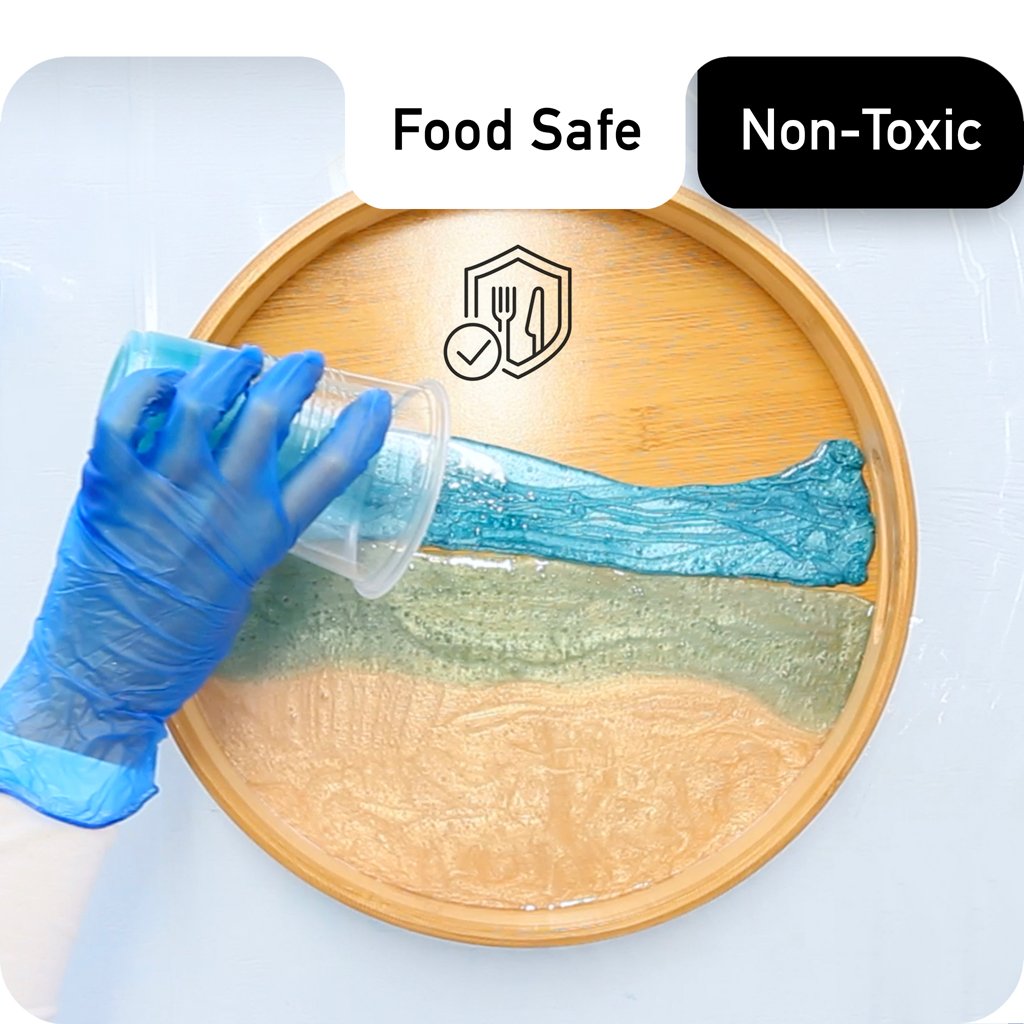
Functional pieces need to hold up to real life, and this resin delivers. Once it hardens fully for 72 hours and you have followed the label directions, the surface becomes FDA-compliant for food contact.
That certification opens up a world of practical creations. Charcuterie boards, drink coasters, serving trays, and custom kitchenware all become fair game. Home cooks and sellers alike gain the confidence to build items people actually use at the table. Heat resistance up to 120°F rounds out the practicality, letting a warm mug or plate rest safely on your handiwork.
UV Resistance That Keeps Work Looking New
Sunlight is the quiet enemy of cheaper coatings, slowly yellowing and dulling them over time. Built-in stabilizers guard against that fate, holding clarity steady even under bright studio lamps or a sunny windowsill. Some crafters compare this staying power to the durability they expect from a dedicated uv resin, and it keeps tabletops, wall art, and display items glass-clear season after season. Your effort stays gorgeous long after the pour, which protects both your reputation and your customers' satisfaction.
Made in the USA With Consistent Quality
Every batch is produced in the USA under strict quality control, which shows up in reliable clarity and predictable performance from one bottle to the next. Domestic manufacturing also means faster shipping and responsive support whenever a question pops up mid-pour. Buying from a source that stands behind its formula gives you one less thing to second-guess. That dependable consistency, batch after batch, is exactly what serious makers rely on.
Ready to Pour? Start Your Next Piece Today
Cleaner air, crystal clarity, and dependable results are no longer a distant wish. Clear Resin brings all three together so you can create wherever inspiration strikes, indoors and worry-free. Choose the size that fits your ambitions, gather a few simple supplies, and pour with total comfort. Whatever you dream up next, from glossy art to functional keepsakes, this gentle formula is ready when you are. Add your kit to the cart and feel the difference a fume-free pour makes.
Frequently Asked Questions
What is low odor epoxy resin?
Low odor epoxy resin is a two-part coating formulated to release little to no harsh chemical scent as it hardens. Clear Resin achieves this by leaving out aggressive solvents and VOCs, so you get glossy, durable results while working comfortably indoors, even in rooms with limited airflow or ventilation.
Is low odor epoxy resin safe to use indoors?
Yes, it is well suited to indoor spaces. Because the formula is typically non-toxic and releases no fumes or VOCs when used as directed, you can pour in apartments, bedrooms, or small studios. Still keep the area well-ventilated and wear gloves to protect your skin during every session.
Does low odor epoxy resin really have no smell?
It has a very mild scent rather than being fully odorless. Traditional epoxies produce a sharp sting that lingers, while this formula keeps things gentle and manageable. You can layer, tint, and pour for hours without the pounding headache that stronger, solvent-heavy products often cause in enclosed rooms.
What does low VOC mean in epoxy resin?
Low VOC means the product releases very few volatile organic compounds, the airborne chemicals behind that eye-watering sting. Clear Resin goes further by releasing no fumes or VOCs at all when used as directed. That cleaner profile protects your lungs and keeps the air around your workspace noticeably fresher.
Is low odor epoxy resin food-safe?
Once it fully hardens for 72 hours and you follow the label directions, the cured surface becomes FDA-compliant for food contact. That makes it ideal for coasters, serving trays, cheese boards, and custom kitchenware. Always allow complete hardening time before putting any functional piece into everyday use.
What can I make with low odor epoxy resin?
The possibilities are wide open. Create fluid art, geodes, and ocean pours, add glossy topcoats to paintings, or craft coasters, trays, tumblers, jewelry, and keychains. Its clarity and self-leveling flow suit both decorative pieces and functional items, giving beginners and sellers plenty of room to experiment freely.
How long does low odor epoxy resin take to cure?
The surface turns dry to the touch roughly 24 hours after pouring and reaches full hardness near the 72-hour mark. You also get about 35 minutes of working time once resin and hardener are mixed, so prep your surface and gather supplies before you begin.
Which kit size should I choose?
Pick based on how much you make. The 32 oz option suits first-timers testing techniques or crafting gifts, while the 64 oz choice fits tabletops, river designs, and frequent sellers. Larger volumes cost less per ounce, and layering multiple pours covers even the widest surfaces with ease.
How do I prevent bubbles in low odor epoxy resin?
Warm both bottles to 75 to 85°F before mixing, since cold liquid traps air. Stir slowly instead of whipping, then pass a flame torch lightly over the poured surface to release bubbles. When using soft silicone forms, switch to a heat gun so you avoid damaging the material.
Is low odor epoxy resin better for the environment?
It offers a cleaner footprint than older solvent-heavy systems by cutting fumes and VOCs. Makers seeking an eco-friendly epoxy appreciate that gentler chemistry, which supports safer indoor sessions and a more environmental approach to crafting. Pair it with reusable tools and molds to reduce waste even further across projects.